
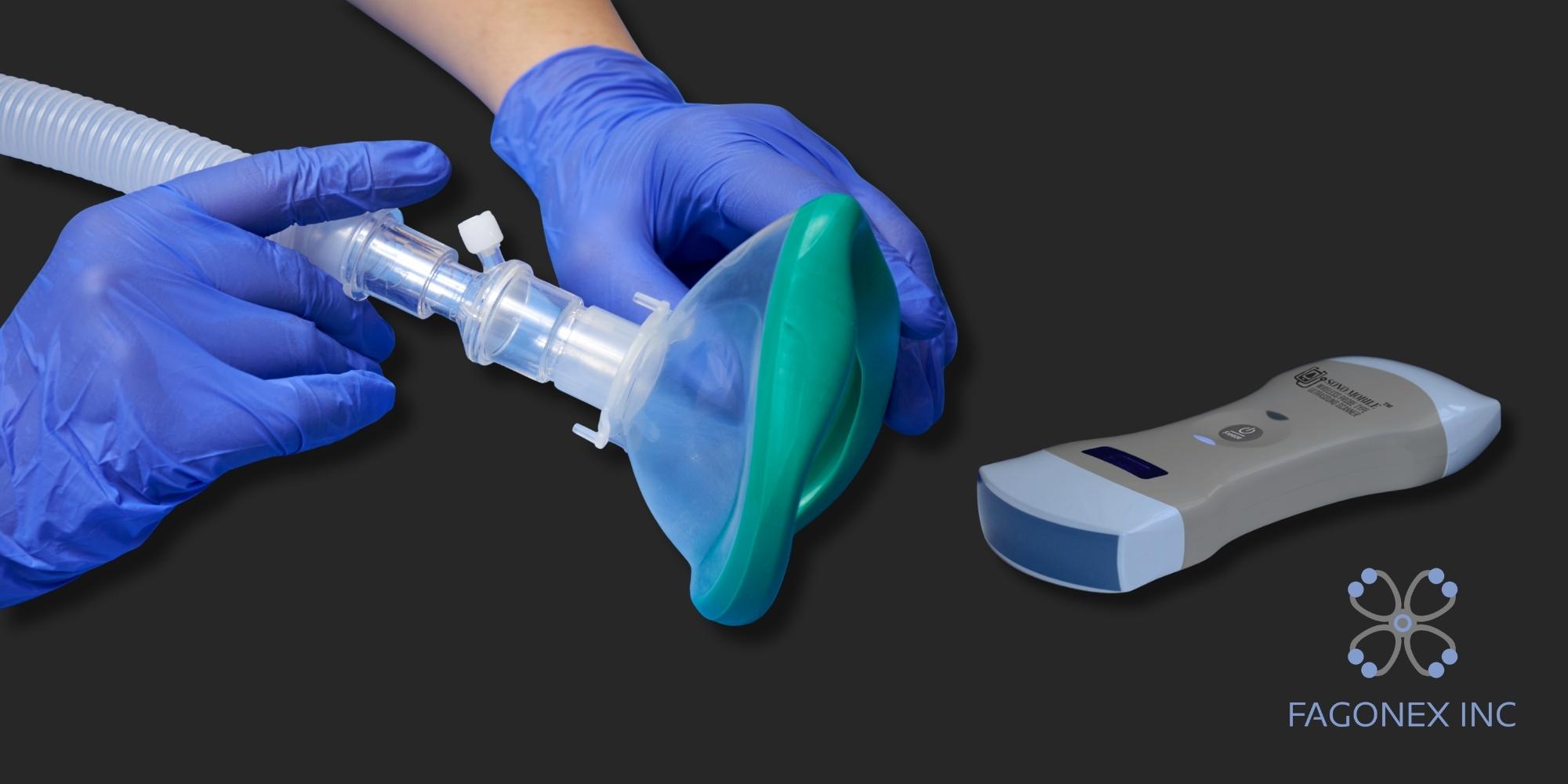
Sono Mobile® CL64 for Anesthesiology: Portable Ultrasound for Regional Anesthesia, Vascular Access, and Point-of-Care Ultrasound
Advanced Portable Ultrasound for Anesthesiologists
Sono Mobile® CL64 is a wireless handheld ultrasound system designed to support anesthesiologists with real-time imaging at the point of care. By providing immediate visualization of anatomical structures, including nerves, blood vessels, muscles, soft tissues, the lungs, and the heart, Sono Mobile® CL64 can support a wide range of anesthesia and perioperative applications.
Portable ultrasound has become an increasingly valuable tool in regional anesthesia, ultrasound-guided nerve blocks, vascular access, airway assessment, cardiac evaluation, lung ultrasound, pain management, and point-of-care ultrasound (POCUS).
With a compact and portable design, Sono Mobile® CL64 can be brought directly to the patient’s bedside, operating room, ICU, emergency department, or other clinical environments where rapid ultrasound assessment is needed.
Ultrasound-Guided Regional Anesthesia
One of the most important applications of ultrasound in anesthesiology is ultrasound-guided regional anesthesia.
Sono Mobile® CL64 enables anesthesiologists to visualize relevant anatomy in real time before and during procedures. Depending on the clinical application, ultrasound imaging can help identify nerves, fascial planes, muscles, blood vessels, and surrounding soft tissues.
This real-time anatomical visualization can support:
Ultrasound-guided peripheral nerve blocks
Regional anesthesia procedures
Fascial plane blocks
Identification of target anatomy
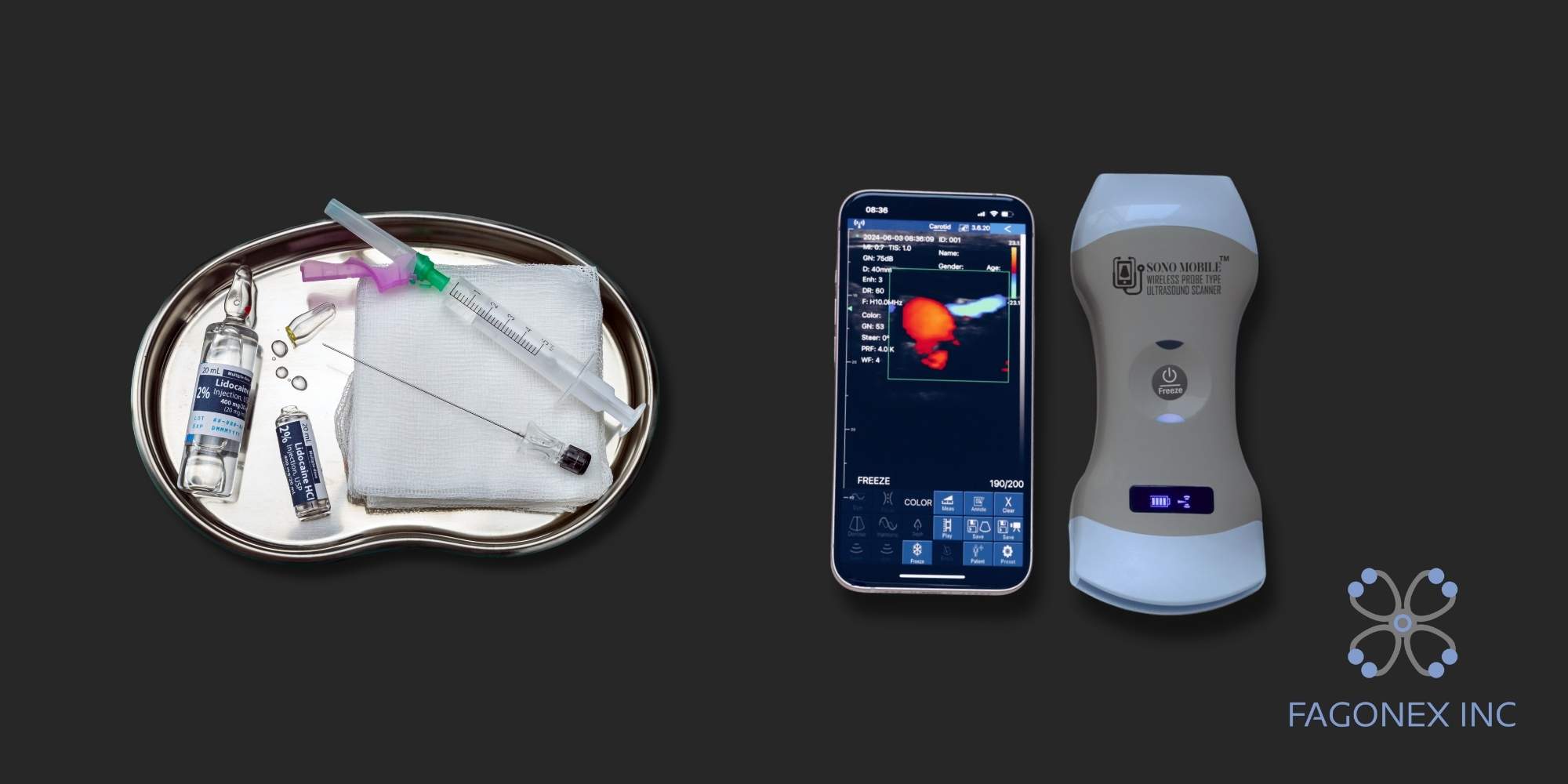
Needle visualization and procedural guidance
Assessment of anatomical variations
More precise needle positioning
By using ultrasound rather than relying exclusively on anatomical landmarks, anesthesiologists can obtain a more direct view of the patient’s anatomy during selected procedures.
Ultrasound-Guided Vascular Access
Ultrasound-guided vascular access is another important application of portable ultrasound in anesthesiology and critical care.
Sono Mobile® CL64 can assist clinicians in visualizing blood vessels before and during vascular access procedures. Real-time imaging can help identify vessel location, depth, size, and surrounding anatomical structures.
Potential applications include:
Central venous access
Peripheral vascular access
Arterial line placement
Identification of blood vessels
Assessment of vessel anatomy
Ultrasound-guided needle positioning
Visualizing vascular structures can help clinicians plan the approach and potentially reduce unnecessary needle passes and procedure-related complications.
Point-of-Care Cardiac Ultrasound for Anesthesiologists
Point-of-care cardiac ultrasound can provide rapid bedside information about cardiac structure and function.
Sono Mobile® CL64 can be used as part of a focused cardiac ultrasound examination when rapid assessment is clinically appropriate. Anesthesiologists may use bedside cardiac imaging to support assessment of:
Global cardiac function
Ventricular size and function
Pericardial fluid
Volume and fluid-related assessment
Hemodynamic status
Changes in cardiovascular condition
In perioperative and critical care environments, immediate access to ultrasound can support faster clinical assessment without requiring the patient to be transported to another imaging department.
Lung Ultrasound and Pneumothorax Assessment
Lung ultrasound is another valuable application of point-of-care ultrasound in anesthesia and critical care.
Sono Mobile® CL64 can support bedside assessment of the lungs and pleural space, including evaluation of findings such as:
Lung sliding
Pleural abnormalities
Pleural effusion
Pneumothorax-related findings
Interstitial and pulmonary patterns
Changes in the pleural space
Portable lung ultrasound can be particularly useful when rapid bedside assessment is required.
Airway Assessment and Ultrasound-Guided Procedures
Ultrasound can also support selected airway assessment and airway management applications.
Depending on the clinical situation and the clinician’s training, Sono Mobile® CL64 may assist with the evaluation of airway-related anatomy and provide real-time imaging during selected procedures.
Ultrasound can also support procedural planning in situations where anatomical landmarks may be difficult to identify.
Ultrasound for Pain Management
Ultrasound-guided procedures are widely used in pain management and regional anesthesia.
Sono Mobile® CL64 can help anesthesiologists visualize anatomical structures during selected injections and pain-management procedures, including procedures involving nerves, joints, muscles, and surrounding soft tissues.
Real-time imaging may support more accurate targeting while helping clinicians identify nearby anatomical structures.
Preoperative Ultrasound Assessment
Preoperative assessment is an important part of modern anesthetic care. Point-of-care ultrasound for preoperative assessment can provide additional anatomical and physiological information that may be useful when developing an anesthesia plan.
Sono Mobile® CL64 can support focused bedside evaluation in areas such as:
Airway anatomy
Cardiac assessment
Lung assessment
Gastric assessment when clinically indicated
Vascular anatomy
Anatomical variations
Selected perioperative ultrasound examinations
Portable ultrasound allows this information to be obtained directly at the point of care rather than requiring the patient to be moved to another location.

Enhanced Procedural Precision and Patient Safety
One of the primary advantages of ultrasound-guided anesthesia procedures is real-time visualization.
Instead of relying solely on surface landmarks, clinicians can visualize relevant anatomy during selected procedures. This can help with identification of target structures and surrounding anatomy, potentially improving procedural precision.
For appropriately trained clinicians, ultrasound may help reduce unnecessary needle passes and support safer procedural planning.
Portable Ultrasound at the Point of Care
Traditional ultrasound systems can be large and difficult to move between clinical environments. A handheld ultrasound system such as Sono Mobile® CL64 provides a more portable approach.
The compact design allows anesthesiologists to bring ultrasound imaging directly to:
Operating rooms
Preoperative areas
Post-anesthesia care units
Intensive care units
Emergency departments
Pain clinics
Procedure rooms
Bedside assessment areas
This portability can make ultrasound more accessible during time-sensitive clinical situations.
Real-Time Imaging for Faster Clinical Decision-Making
In anesthesiology, clinical decisions often need to be made quickly. Having a portable ultrasound machine for anesthesiologists immediately available can provide real-time visual information at the bedside.
Sono Mobile® CL64 can support focused ultrasound examinations and procedure guidance without requiring the patient to leave the clinical area.
This can contribute to a more efficient workflow by bringing imaging capability directly to the clinician.
Education and Training in Anesthesiology
Portable ultrasound can also serve as an educational tool for anesthesiology residents, fellows, and healthcare professionals learning point-of-care ultrasound.
Sono Mobile® CL64 can be incorporated into ultrasound education and hands-on training to help learners develop an understanding of:
Sonoanatomy
Peripheral nerves
Vascular anatomy
Needle visualization
Regional anesthesia techniques
Lung ultrasound
Focused cardiac ultrasound
Ultrasound-guided procedures
Real-time imaging can help connect anatomical concepts with practical procedural skills.
Ultrasound for Difficult Anatomy
Patients with challenging anatomy may present additional difficulties when conventional landmark-based techniques are used.
In selected cases, ultrasound can provide a visual roadmap of underlying anatomical structures. Sono Mobile® CL64 can support clinicians in identifying relevant structures and adapting their procedural approach based on real-time imaging.
This can be particularly valuable when anatomical landmarks are difficult to palpate or when anatomical variation is suspected.

Non-Ionizing and Repeatable Imaging
Ultrasound uses sound waves rather than ionizing radiation. This makes ultrasound particularly useful for bedside examinations that may need to be repeated as clinically appropriate.
Sono Mobile® CL64 can support repeated focused assessments during the perioperative period, critical care, and procedural care without exposing patients to ionizing radiation.
Versatile Ultrasound Applications in Anesthesiology
Beyond regional anesthesia and vascular access, Sono Mobile® CL64 can support a broad range of point-of-care ultrasound applications.
Depending on the clinician’s training, institutional protocols, and clinical indication, applications may include:
Regional anesthesia
Peripheral nerve blocks
Vascular access
Arterial line placement
Central venous access
Lung ultrasound
Focused cardiac ultrasound
Airway assessment
Pain management
Preoperative ultrasound
Bedside procedural guidance
Assessment of soft tissues
Selected abdominal and thoracic assessments
This versatility makes a handheld ultrasound system a practical addition to the modern anesthesiology workflow.
Why Choose Sono Mobile® CL64 for Anesthesiology?
Sono Mobile® CL64 combines portable ultrasound imaging, wireless connectivity, and point-of-care accessibility in a compact handheld platform.
For anesthesiologists, its value lies in bringing ultrasound directly to the patient and supporting a variety of clinical applications from regional anesthesia and vascular access to focused cardiac and lung assessment.
Key advantages include:
Portable handheld ultrasound for bedside use
Real-time imaging for selected procedures and assessments
Support for ultrasound-guided regional anesthesia
Support for vascular access guidance
Applications in lung and cardiac POCUS
Support for selected airway and pain-management procedures
Useful for preoperative and perioperative assessment
Suitable for education and ultrasound training
Convenient for use across multiple clinical environments
Non-ionizing imaging technology
Versatile applications beyond traditional ultrasound examinations
Sono Mobile® CL64 and Point-of-Care Ultrasound in Modern Anesthesia
As point-of-care ultrasound continues to become an important component of modern clinical practice, anesthesiologists increasingly use bedside imaging to complement physical examination and other diagnostic information.
Sono Mobile® CL64 provides a portable ultrasound solution that can be integrated into anesthesia workflows where immediate imaging, procedural guidance, or focused assessment is required.
From ultrasound-guided nerve blocks and vascular access to lung ultrasound, focused cardiac assessment, airway evaluation, and perioperative POCUS, a handheld ultrasound system can provide clinicians with real-time anatomical information when and where it is needed.
Explore Sono Mobile® CL64 Anesthesiology Applications
Below, you can explore a collection of Sono Mobile® CL64 case studies, ultrasound images, and clinical applications demonstrating how portable ultrasound can be incorporated into different anesthesia and point-of-care scenarios.
If you are an anesthesiologist, anesthesia department, pain specialist, medical educator, or healthcare organization interested in incorporating portable ultrasound into clinical practice, contact our team to learn more about Sono Mobile® CL64 and request a personalized demonstration.
Book your personalized Sono Mobile® CL64 demonstration today and explore the possibilities of portable point-of-care ultrasound for modern anesthesiology.
See Sono Mobile® CL64 in Action
See Sono Mobile® CL64 at work with real-time ultrasound scans for anesthesiology and point-of-care ultrasound (POCUS). Explore how this compact, wireless ultrasound system can support regional anesthesia, vascular access, lung and cardiac assessment, and bedside procedural guidance.
Watch the videos below and experience Sono Mobile® CL64 in action.